The Book
The Water Bear Ursa Maritamis
Ursa Maritamis: The Water Bear is a complex, layered novel that challenges modern assumptions about conservation, progress, and control. The story begins with a bold rescue mission designed to save polar bears from shrinking Arctic ice by relocating them to the Rocky Mountains. What follows is a meticulously detailed narrative showing how human planning, no matter how well-funded or well-intentioned, cannot override biological truth.
As the relocated bears thrive and reproduce, tourism booms and donors celebrate success. But beneath the surface, unseen tensions grow. The bears adapt too well. Boundaries blur. Nature asserts itself. The experiment evolves into a crisis that forces soldiers, scientists, and civilians to confront the consequences of reshaping ecosystems for ideological comfort.
Interwoven with military deployments, scientific debates, and personal loss, the novel refuses easy answers. Thornthwaite presents polar bears not as victims or mascots, but as apex predators whose instincts remain unchanged regardless of geography. His portrayal is grounded, respectful, and unflinching.
This is not a political novel, nor a sentimental environmental tale. It is a warning about arrogance, a study of unintended consequences, and a reminder that nature does not negotiate. The events of this story feel disturbingly possible, and that is precisely its power.
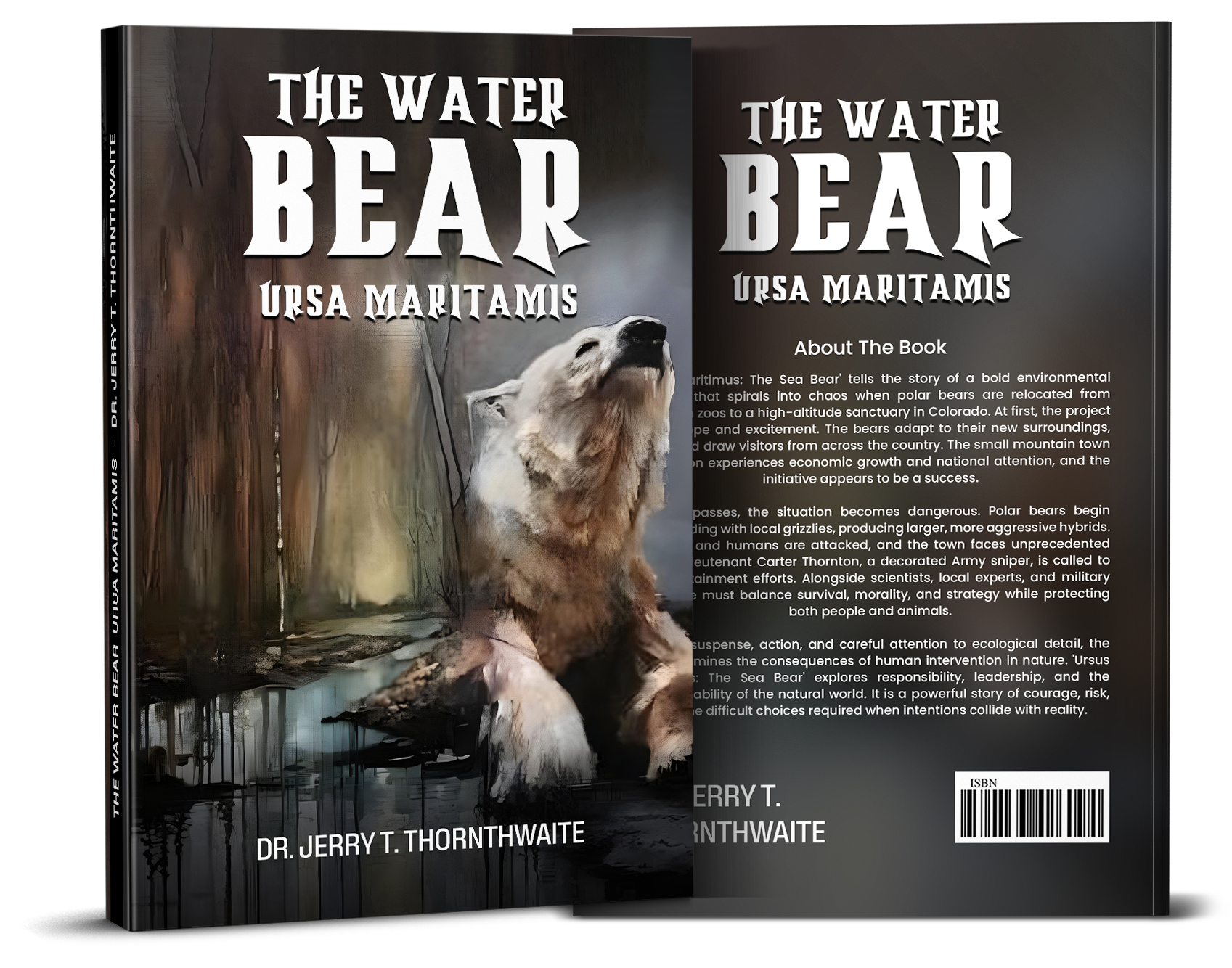
The Water Bear Ursa Maritamis
This book is for readers who want more than entertainment. Ursa Maritamis: The Water Bear challenges assumptions about conservation, progress, and human authority over nature. It offers no easy villains and no comforting resolutions.
If you value stories grounded in realism, scientific plausibility, and moral tension, this novel delivers. It explores how well-meaning actions can create irreversible outcomes when ideology outruns understanding. The polar bear becomes a mirror, reflecting human ambition and blindness rather than serving as a symbol.
Readers who appreciate military realism, environmental ethics, and character-driven storytelling will find this book deeply engaging. It is unsettling by design, not because it exaggerates, but because it feels possible.
This is a novel that stays with you. It invites discussion, debate, and reflection long after the final page.